Once Upon a God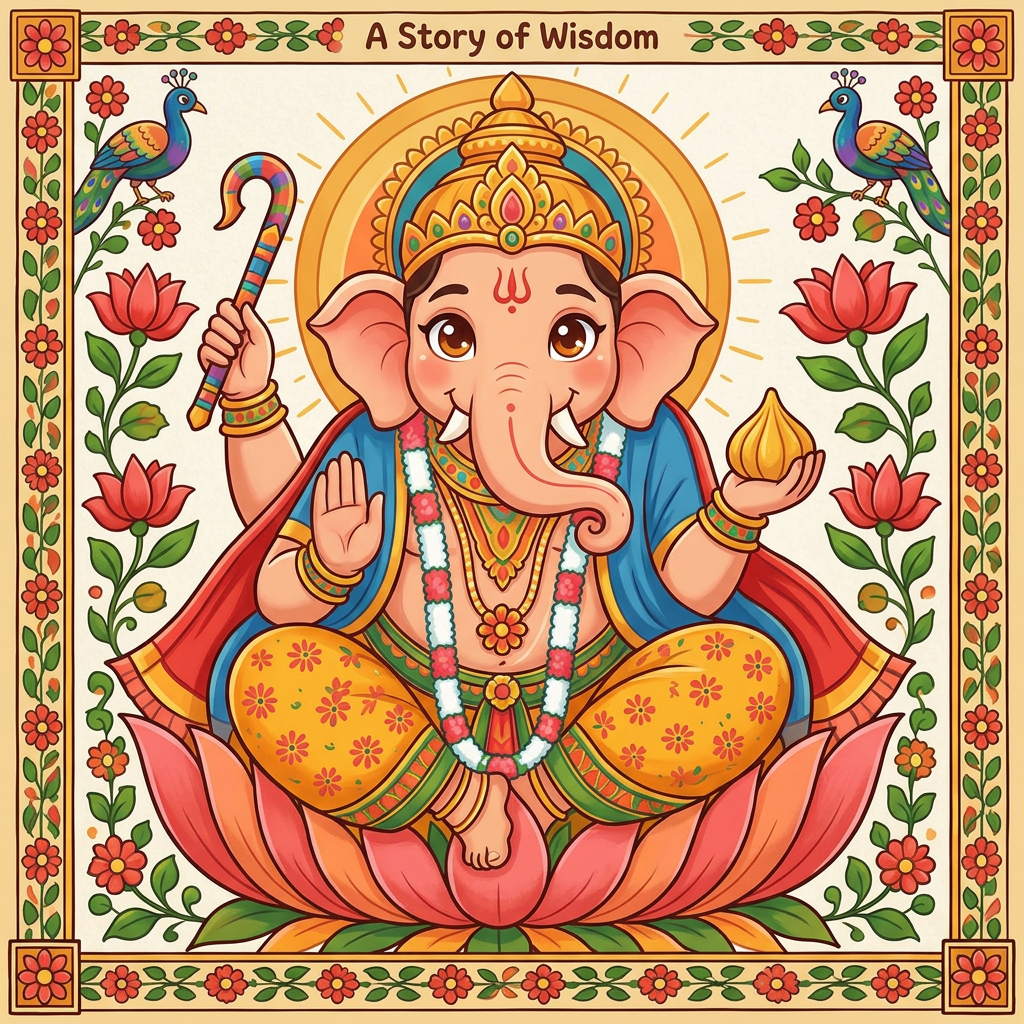
Amazing deity facts
Little things to discover about 18 figures across four traditions.
- 1Ganesha has an elephant head and a curling trunk.
- 2His little animal companion is a mouse.
- 3His favorite treats include sweet dumplings called modaks.
- 4Many people pray to Ganesha before starting something new.
- 5His big ears remind us to listen carefully before we speak.
- 6In pictures, one tusk is shorter than the other; he is sometimes called Ekadanta, meaning one-tusked.
- 7The festival Ganesh Chaturthi celebrates Ganesha with songs, decorations, and sweet treats.
- 8His tiny mouse and enormous elephant head show that even the smallest helper matters.
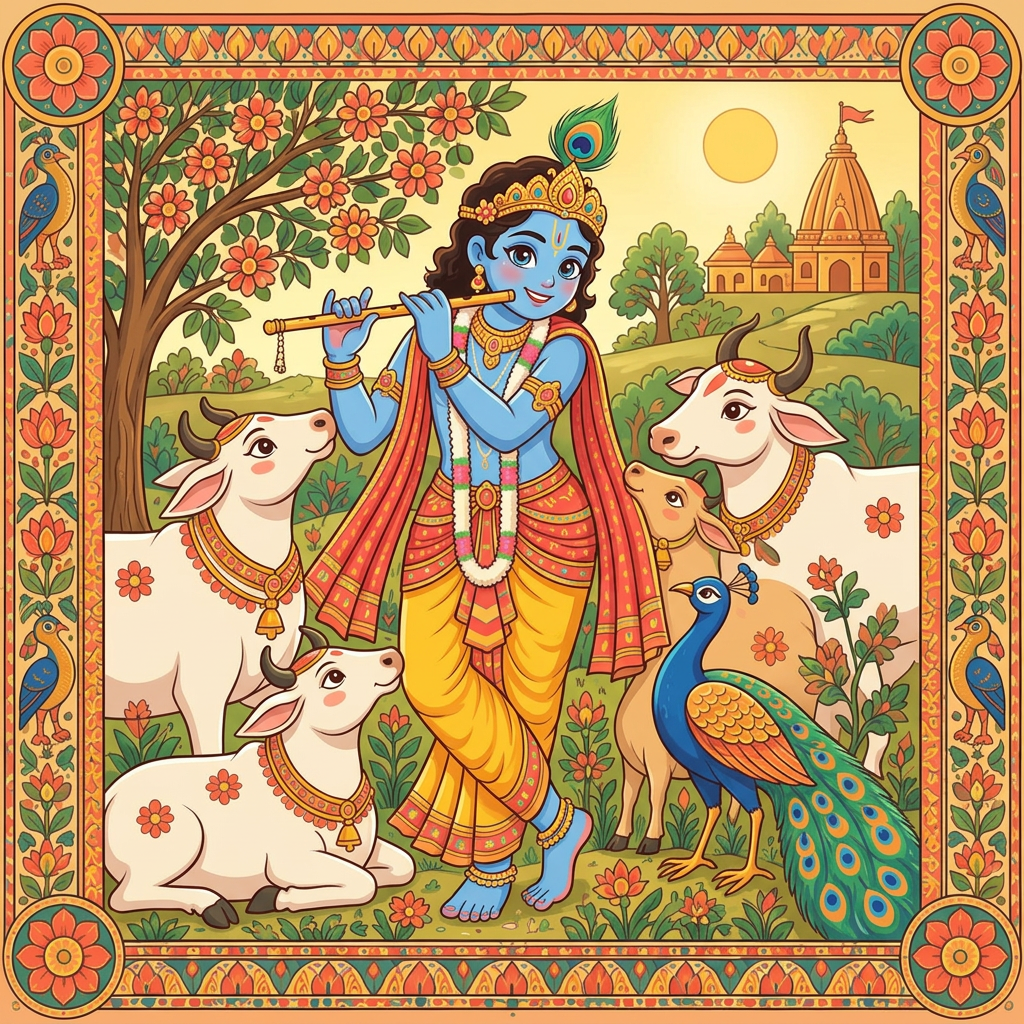
- 1Krishna is often shown wearing a peacock feather.
- 2He plays a flute whose music delights his friends.
- 3Stories tell of little Krishna enjoying freshly churned butter.
- 4Krishna teaches Arjuna in the Bhagavad Gita.
- 5Little Krishna grew up among cowherds in Vrindavan, where cows were part of everyday life.
- 6Janmashtami celebrates Krishna's birth; families may sing, dance, and decorate a little cradle.
- 7His skin is often painted blue, like a deep rain cloud.
- 8Krishna's friend Radha appears in many songs about love and devotion.
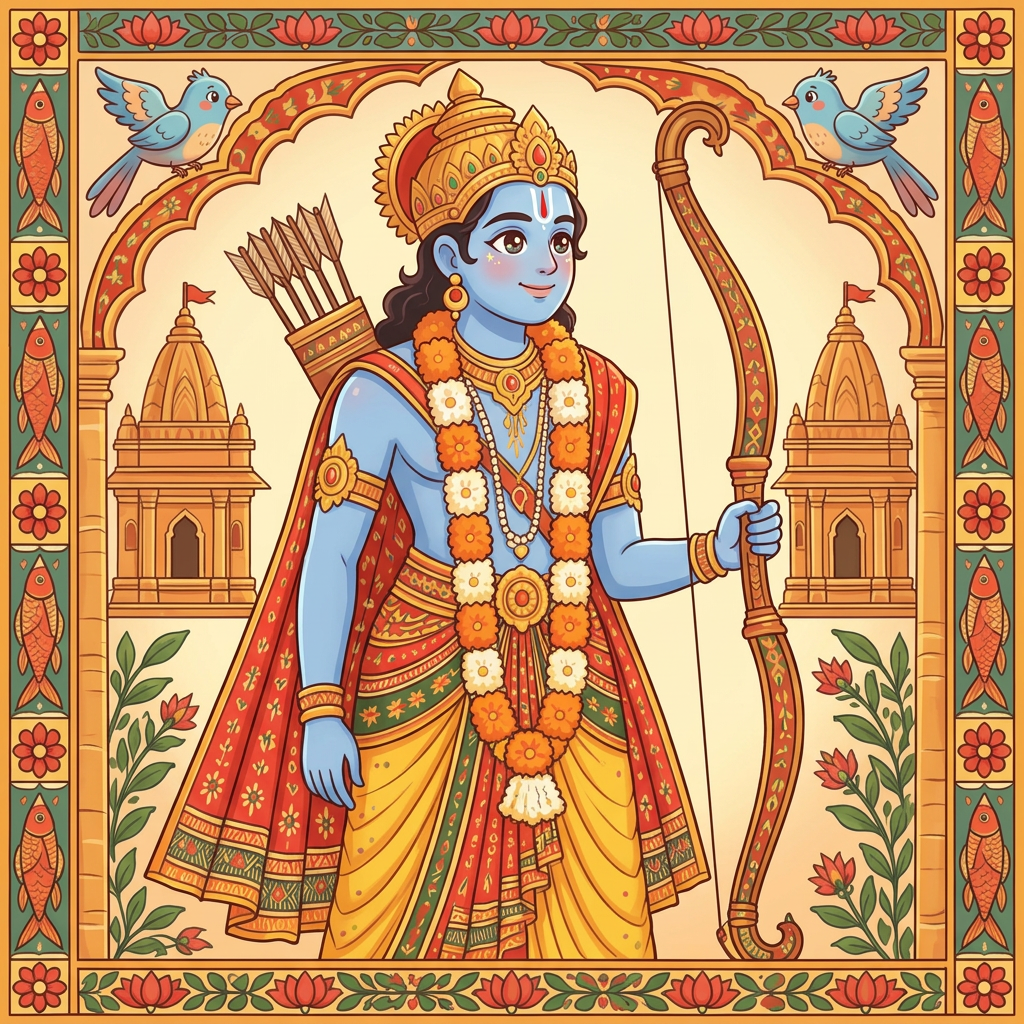
- 1Rama is a prince of Ayodhya.
- 2His story is told in the Ramayana.
- 3His brother Lakshmana joins him during his forest years.
- 4For many Hindus, Diwali celebrates Rama’s joyful return to Ayodhya.
- 5Rama's wife Sita is known in the Ramayana for her courage and strength.
- 6Hanuman is Rama's devoted friend and helps him search for Sita.
- 7Rama often carries a bow, a symbol of his skill and duty to protect others.
- 8Dussehra remembers Rama's victory over Ravana with plays and celebrations in many communities.
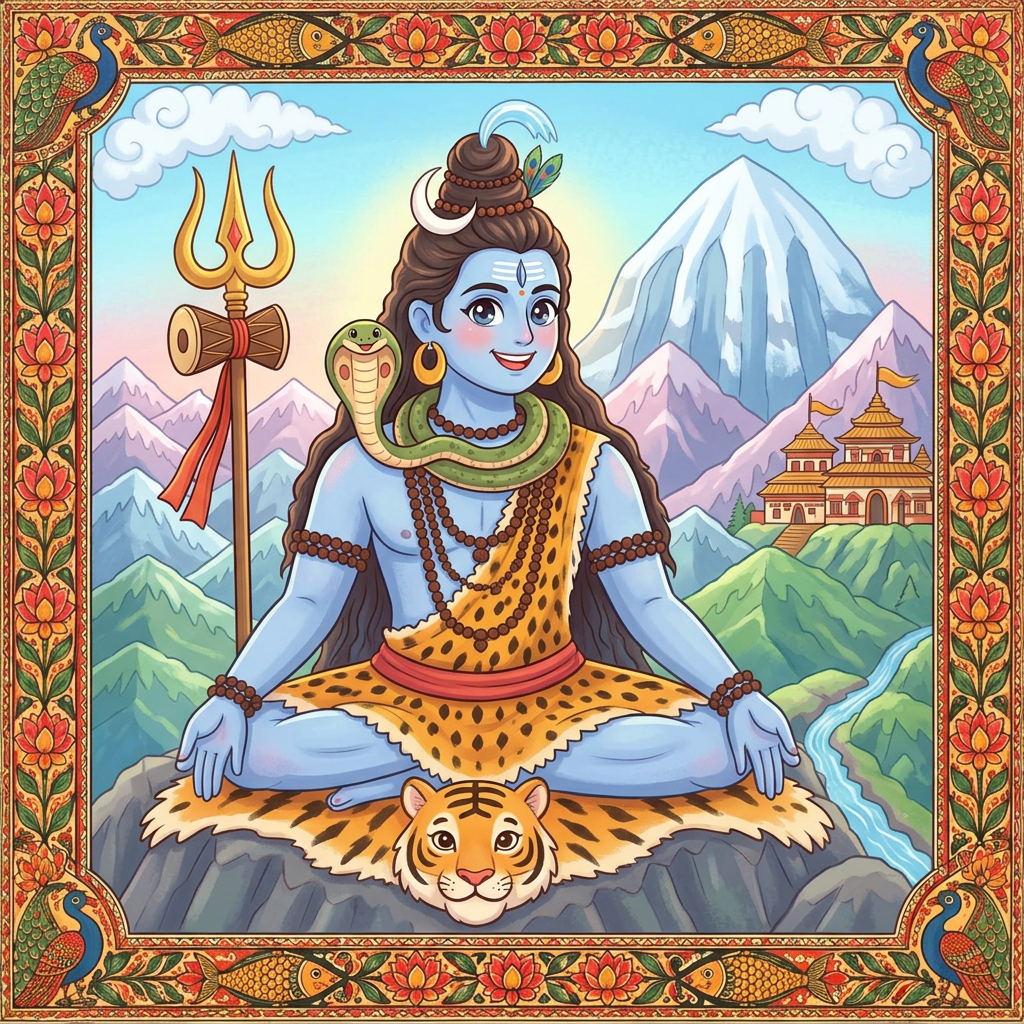
- 1Shiva is often shown with a crescent moon in his hair.
- 2His small, hourglass-shaped drum is called a damaru.
- 3Nandi, the bull, is Shiva’s devoted companion.
- 4As Nataraja, Shiva is the Lord of Dance.
- 5The river Ganga is shown flowing through Shiva's hair in many pictures.
- 6Shiva's three-pronged trident is called a trishula.
- 7Shiva is often shown meditating quietly in the Himalayas.
- 8Maha Shivaratri is a special night when many devotees sing and pray to Shiva.
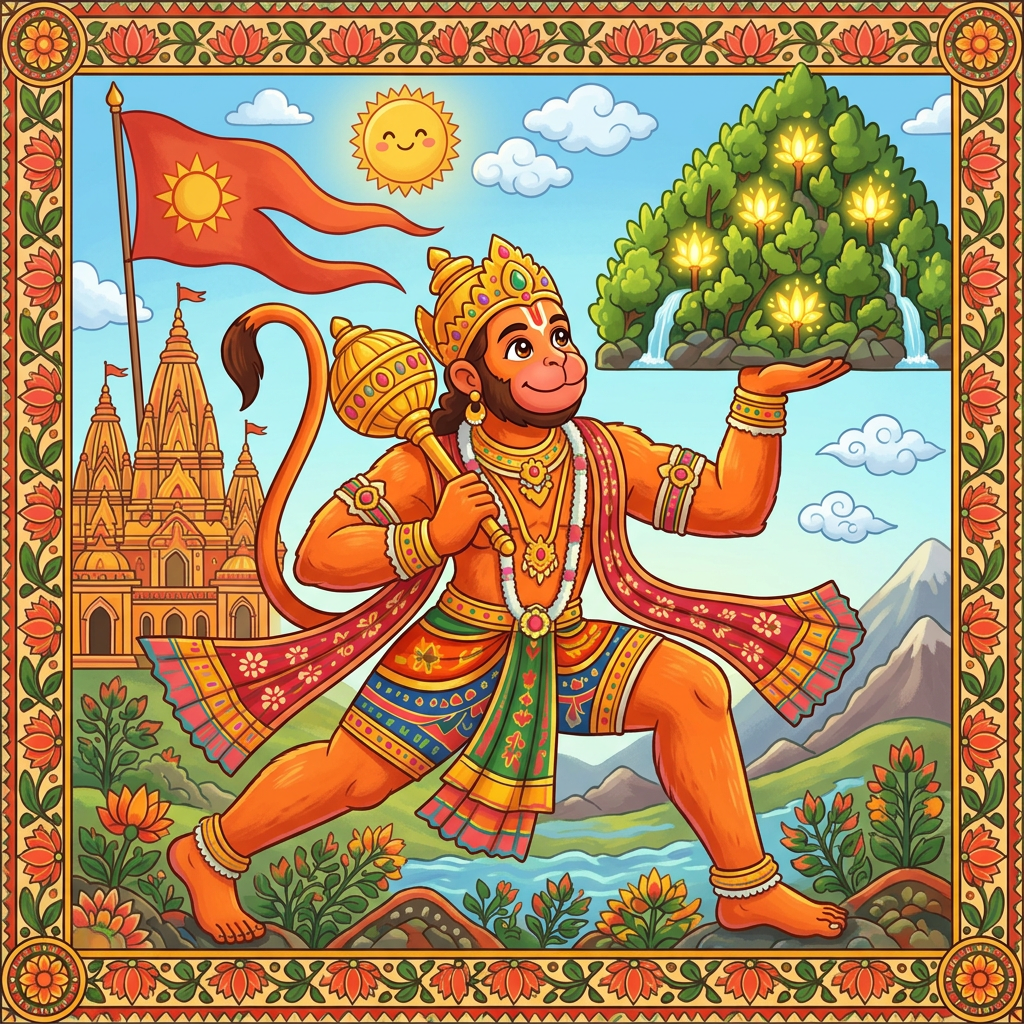
- 1Hanuman’s mother is named Anjana.
- 2He is closely connected with Vayu, the wind god.
- 3Traditional stories tell how Hanuman can become huge or tiny.
- 4The Hanuman Chalisa has forty verses praising his strength and devotion.
- 5Hanuman is often shown holding a gada, or mace, in pictures.
- 6In the Ramayana, he carries Rama's ring to Sita so she knows help is coming.
- 7Some pictures show Hanuman opening his chest to reveal Rama and Sita in his heart.
- 8His great leap over the sea reminds families that courage can come from caring for a friend.
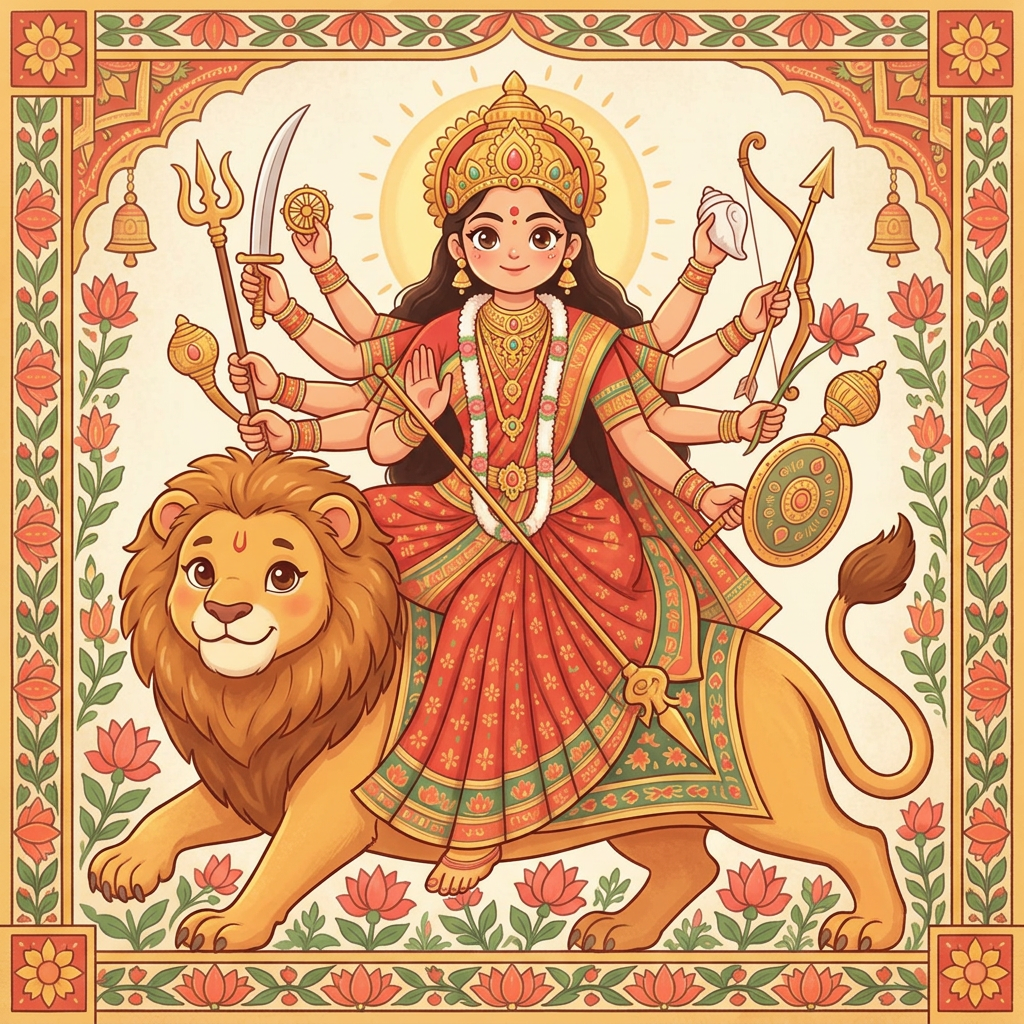
- 1Durga is honored as a loving mother and powerful protector.
- 2She is often shown riding a lion or tiger.
- 3Her many arms hold gifts and weapons from the gods.
- 4Navaratri means nine nights and celebrates the Goddess in many forms.
- 5Durga's name can mean one who is hard to overcome.
- 6During Durga Puja, communities make beautiful images of the Goddess and gather to celebrate.
- 7Her lion reminds us of bravery, while her gentle face reminds us of care.
- 8In some traditions, nine forms of Durga are honored across the nine nights of Navaratri.
- 1Lakshmi is honored as the goddess of good fortune and plenty.
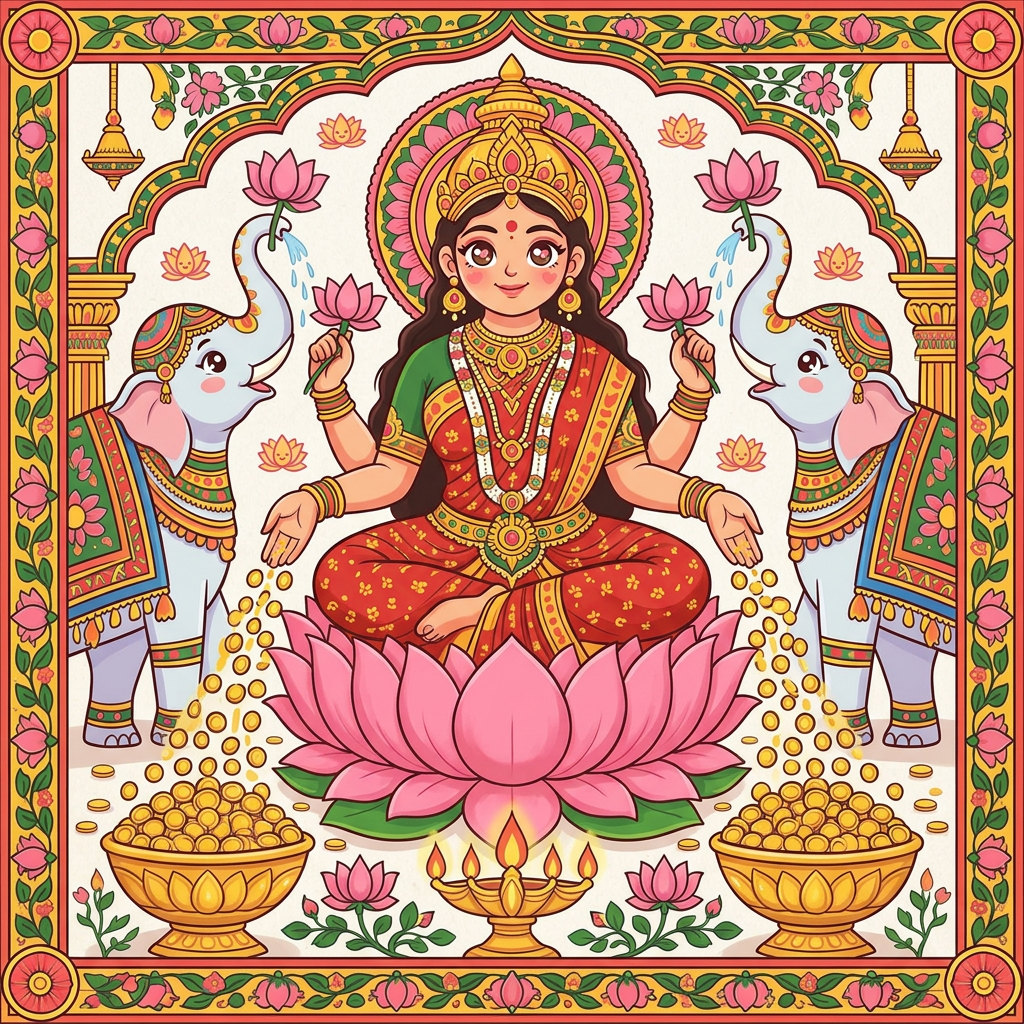
- 2Her lotus flower grows above muddy water.
- 3Many families welcome Lakshmi with lamps at Diwali.
- 4Some pictures show elephants pouring water beside Lakshmi.
- 5Lakshmi is often pictured sitting or standing on a pink lotus.
- 6Her open hand is a sign of blessings and generosity.
- 7She is often shown beside Vishnu, the protector of the world.
- 8For many families, Lakshmi reminds us that sharing and gratitude matter as much as having things.
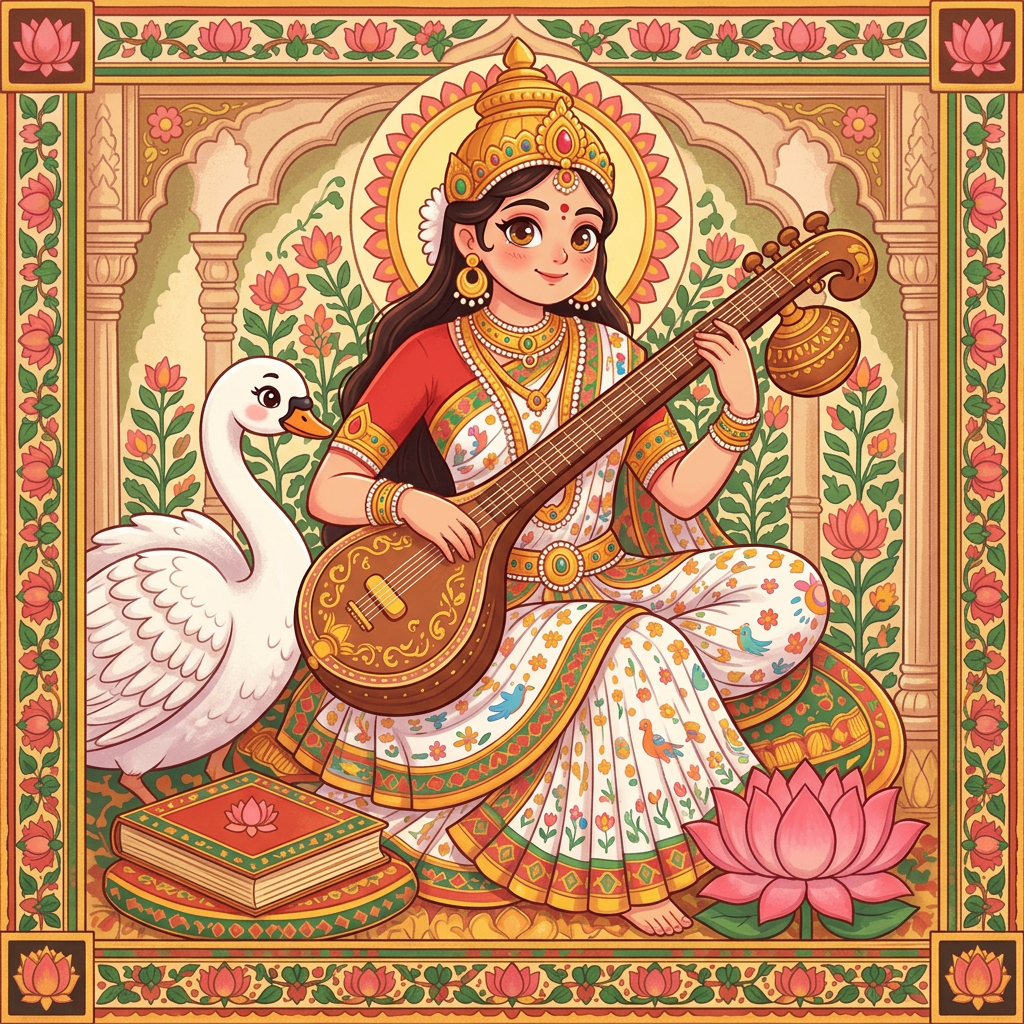
- 1Saraswati's stringed instrument is called a veena.
- 2She is often shown wearing white clothes.
- 3Saraswati is also the name of a sacred river.
- 4Many families celebrate learning and music at Saraswati Puja.
- 5Her animal companion is a swan, often used as a symbol of wisdom.
- 6A book in her hand can represent learning and study.
- 7Vasant Panchami is a spring festival when many people honor Saraswati.
- 8Some children place their books near her image to celebrate the joy of learning.
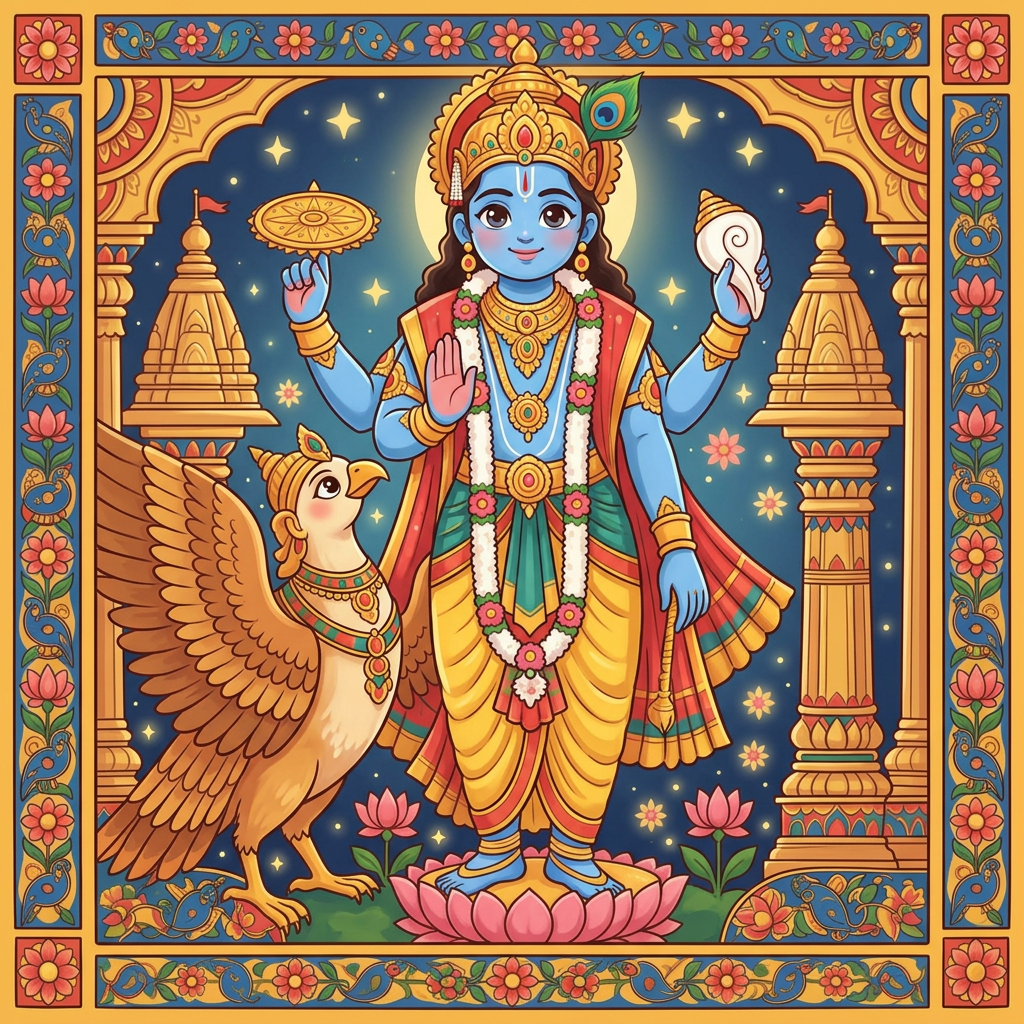
- 1Vishnu is honored as the protector of the world.
- 2His many forms include a fish, a tortoise, and a boar.
- 3His great bird companion is Garuda.
- 4Vishnu is often shown resting on the serpent Shesha.
- 5He often holds a conch shell, a discus, a mace, and a lotus.
- 6Vishnu's conch shell is called Panchajanya and is sounded in many stories.
- 7Rama and Krishna are celebrated as avatars, or earthly forms, of Vishnu in many Hindu traditions.
- 8The little fish Matsya and the tortoise Kurma are also forms Vishnu takes in stories to help the world.
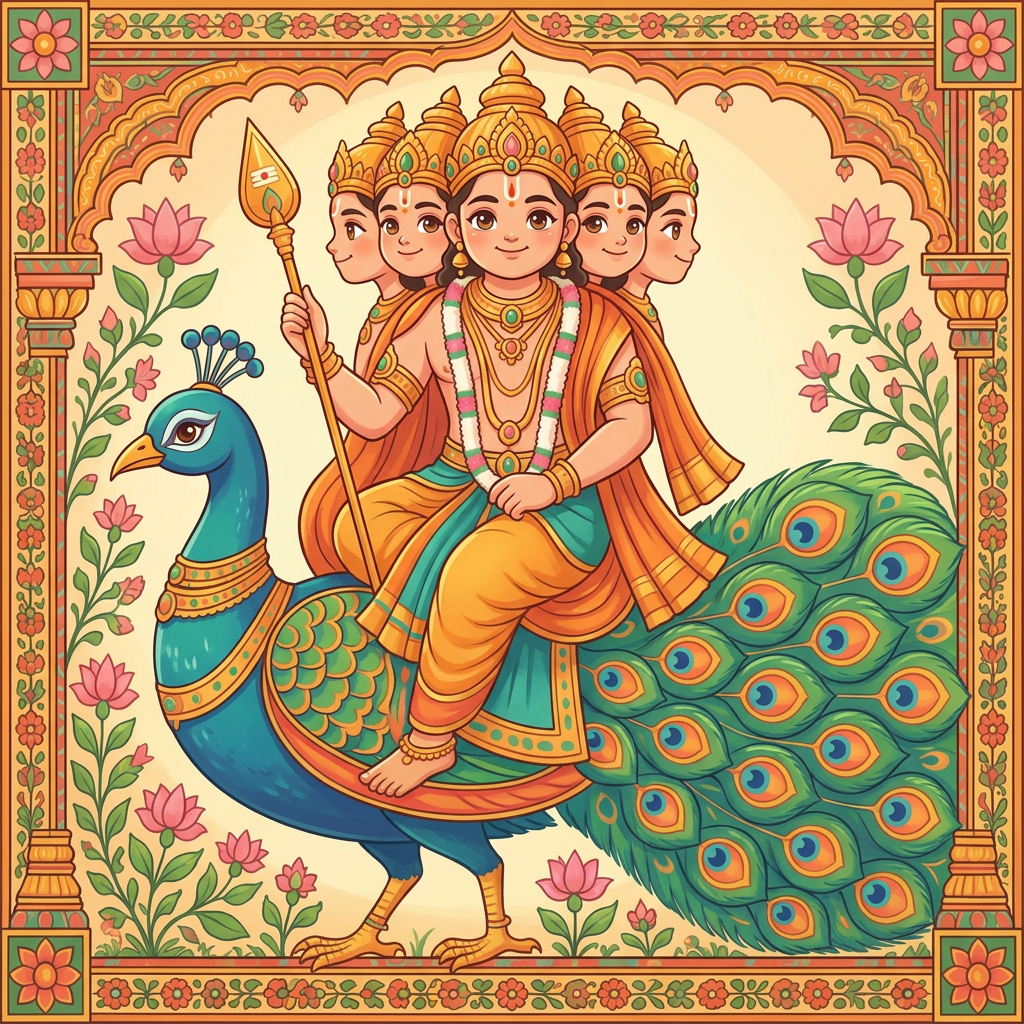
- 1Kartikeya is also called Skanda and Murugan.
- 2He is the son of Shiva and Parvati.
- 3His six faces are linked with six star mothers who cared for him.
- 4In Tamil tradition, his spear is called the vel.
- 5A peacock is Kartikeya's animal companion and is often shown beside him.
- 6Murugan is especially beloved in Tamil-speaking communities.
- 7His brother is Ganesha, whose animal companion is a little mouse.
- 8Thaipusam is a festival when many devotees honor Murugan.
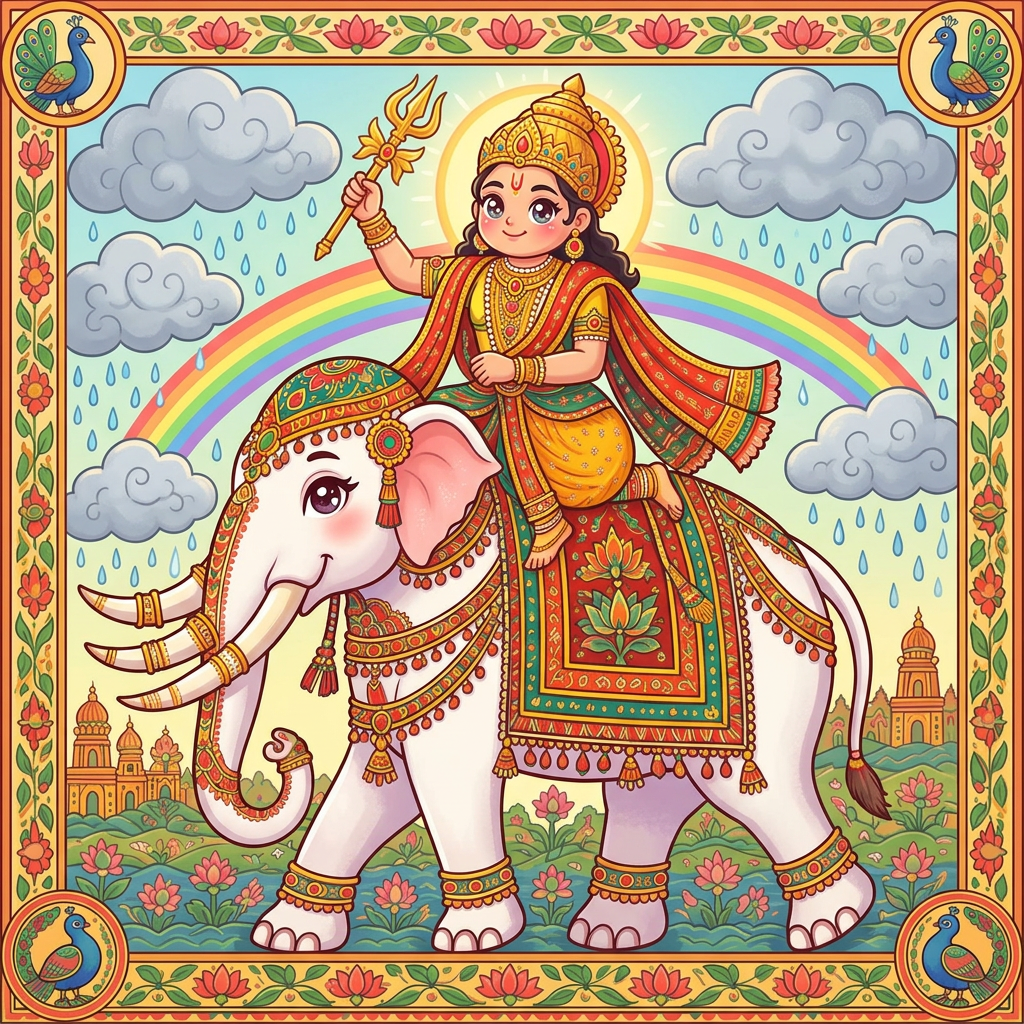
- 1Indra is king of the devas, the heavenly gods.
- 2His thunderbolt is called the vajra.
- 3His elephant companion, Airavata, is often shown with four tusks.
- 4Many hymns in the Rig Veda praise Indra.
- 5Indra is linked with rain and storms in ancient stories.
- 6The vajra is a lightning-like weapon and a symbol of strength.
- 7One story says Indra frees the rivers so water can flow again.
- 8Airavata is a white elephant in many paintings and stories.
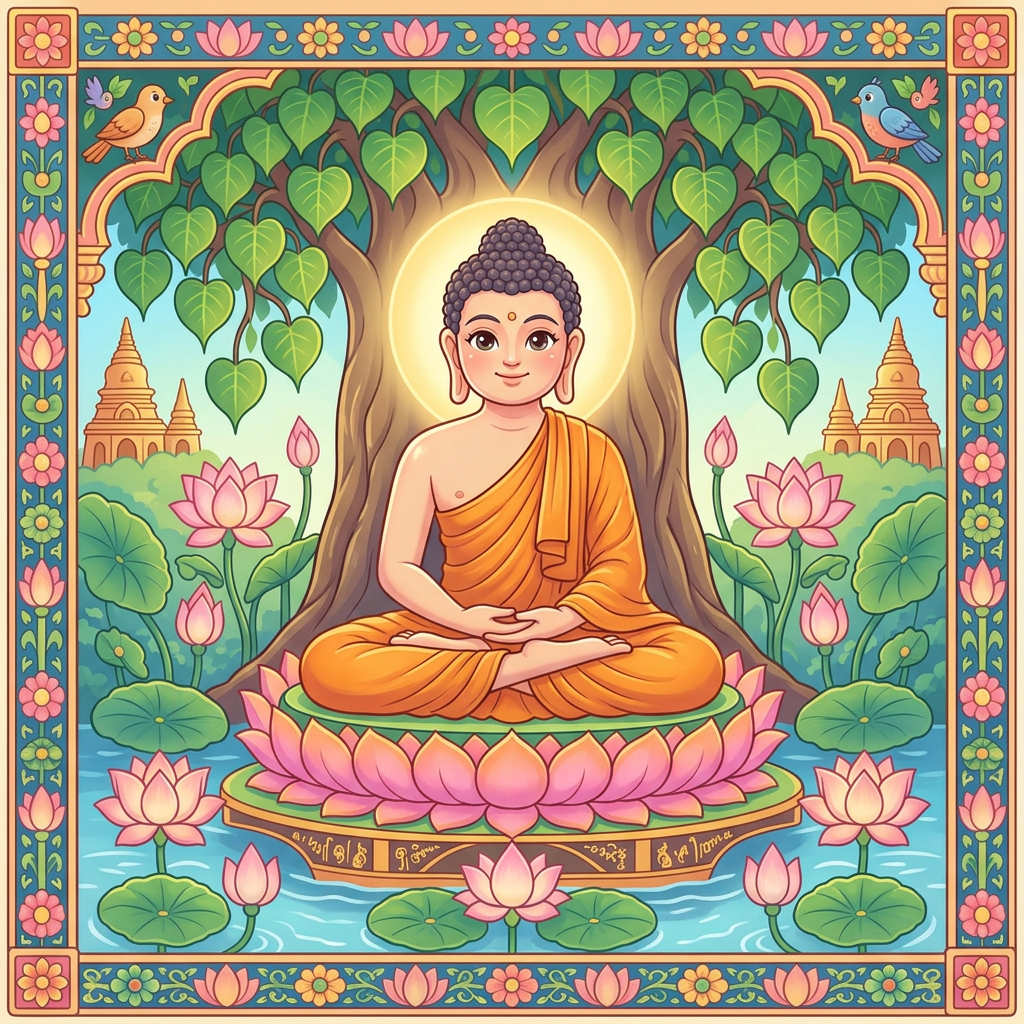
- 1The historical Buddha is also called Siddhartha Gautama.
- 2The word Buddha means awakened one.
- 3The Bodhi tree is a kind of fig tree.
- 4The Buddha taught loving-kindness toward all living beings.
- 5Siddhartha grew up as a prince before leaving home to seek answers about suffering.
- 6The Buddha's first teaching after awakening is remembered at Sarnath, near Varanasi.
- 7A wheel with eight spokes can stand for the Eightfold Path, a guide to living wisely.
- 8Vesak is a festival when many Buddhists remember the Buddha's life.
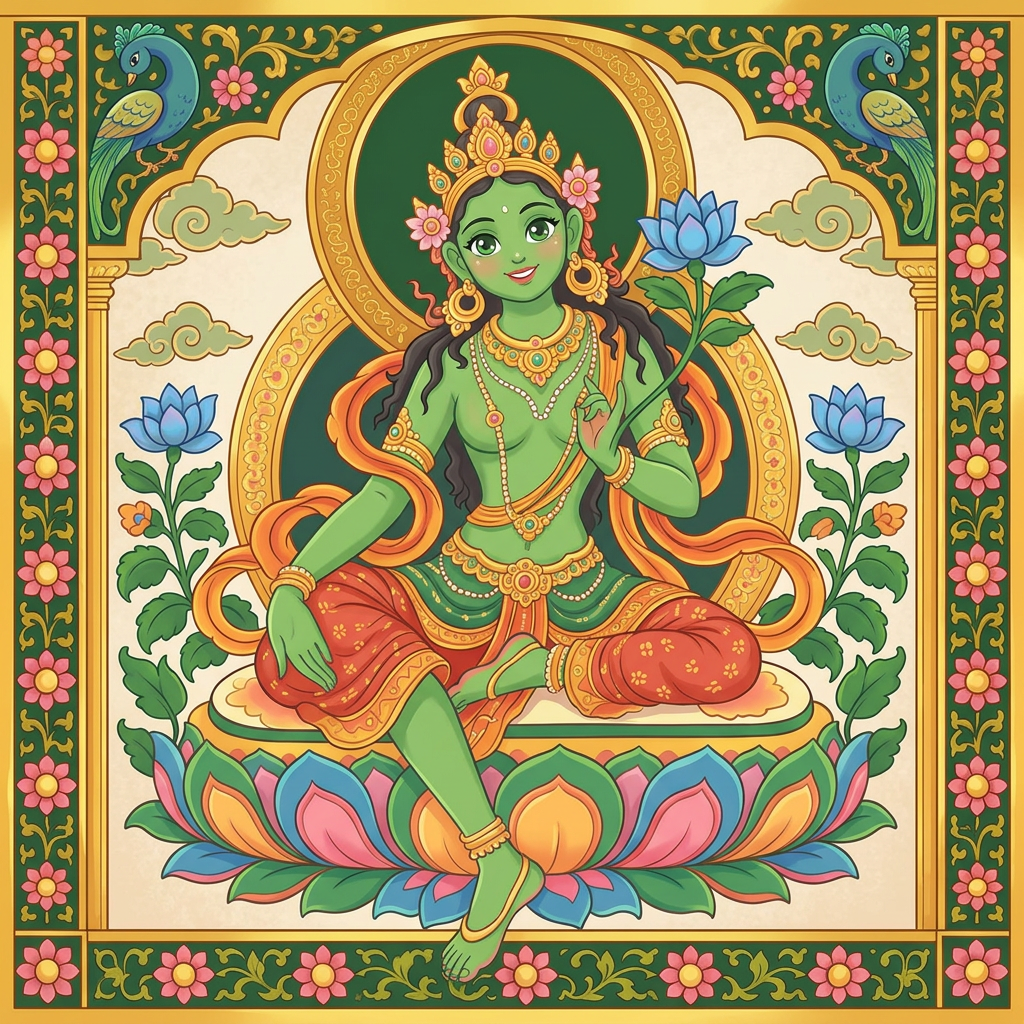
- 1Tara's name can mean a star or someone who helps others cross safely.
- 2Green Tara has one foot stretched out, ready to help.
- 3White Tara is often shown with seven eyes, symbols of watchful care.
- 4Many Buddhists recite praises to twenty-one forms of Tara.
- 5Tara is a female figure of compassion in many Buddhist traditions.
- 6A lotus flower often appears beside her in paintings.
- 7Green Tara's outstretched foot shows she is ready to help quickly.
- 8People may recite Tara's mantra when they want to grow in courage and kindness.
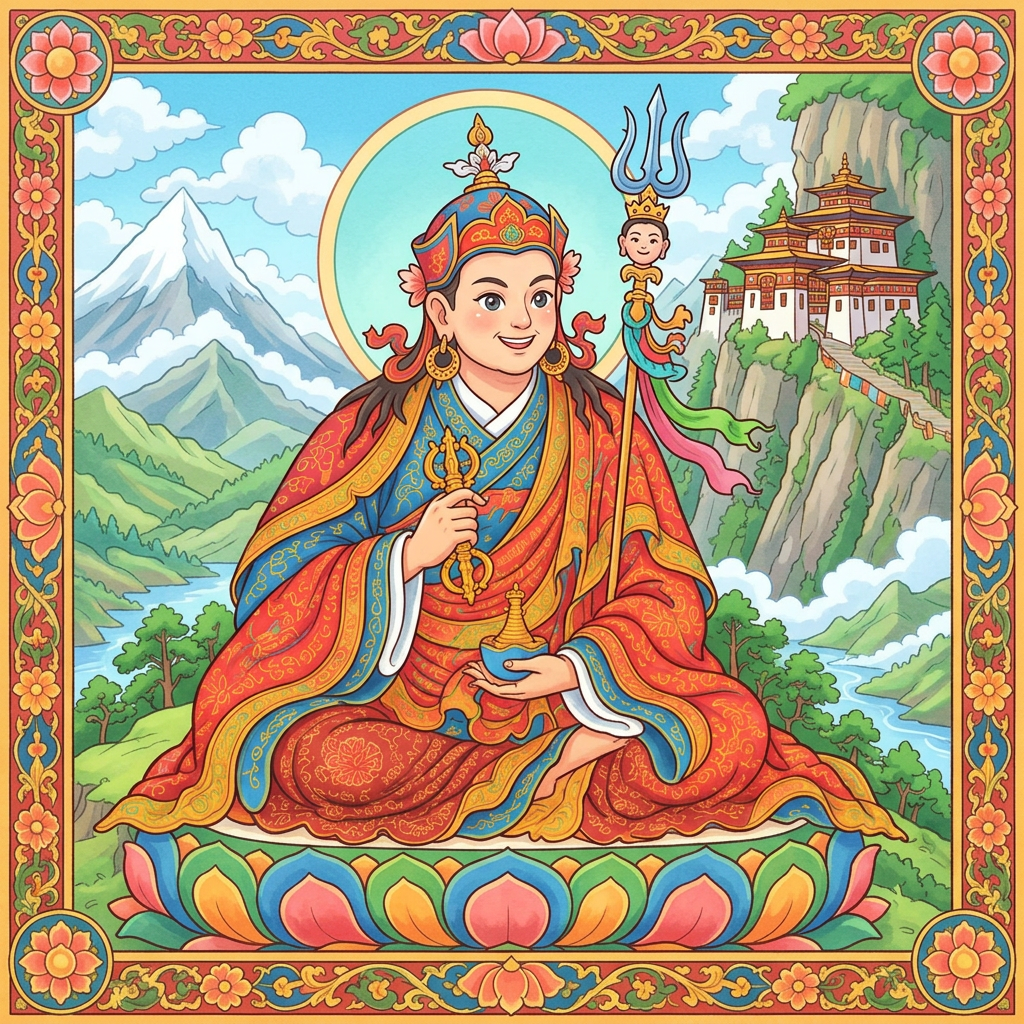
- 1Padmasambhava means lotus-born.
- 2Traditional stories say he appeared in a lotus flower.
- 3He is also called Guru Rinpoche, meaning precious teacher.
- 4He helped Buddhism take root in Tibet.
- 5In Bhutan, the Tiger's Nest monastery is linked to stories about his visit.
- 6His name includes padma, a word meaning lotus.
- 7Many paintings show him holding a small ritual staff called a khatvanga.
- 8Traditional accounts connect him with Samye, Tibet's first Buddhist monastery.
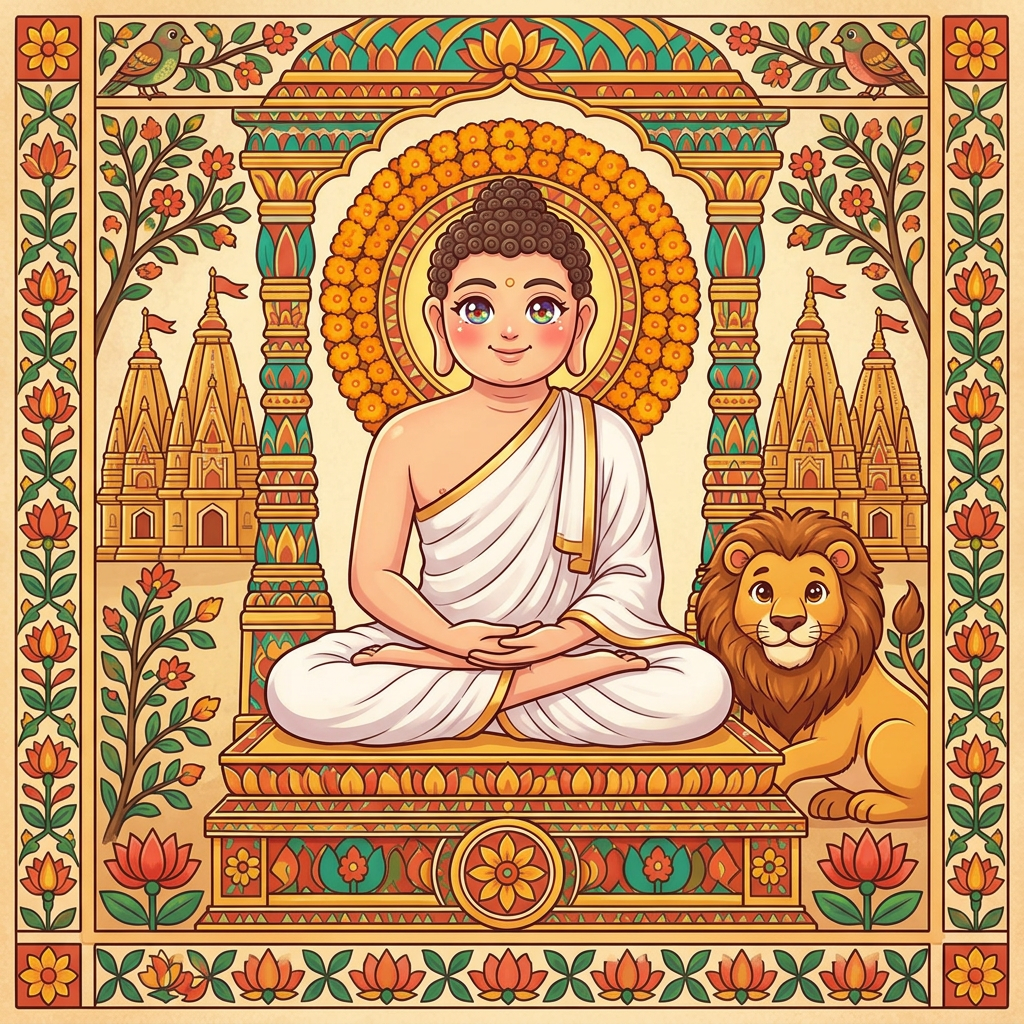
- 1Mahavira's name means great hero.
- 2He is the twenty-fourth Tirthankara, a guide who shows the Jain path to freedom.
- 3His symbol is a lion.
- 4He taught ahimsa, which means not harming living beings.
- 5Mahavira lived in India long ago and became an important teacher of Jainism.
- 6Jains try to be gentle with even the tiniest living creatures.
- 7The word Jina means one who has won over anger and greed, not other people.
- 8Mahavir Jayanti is a festival celebrating his birth.
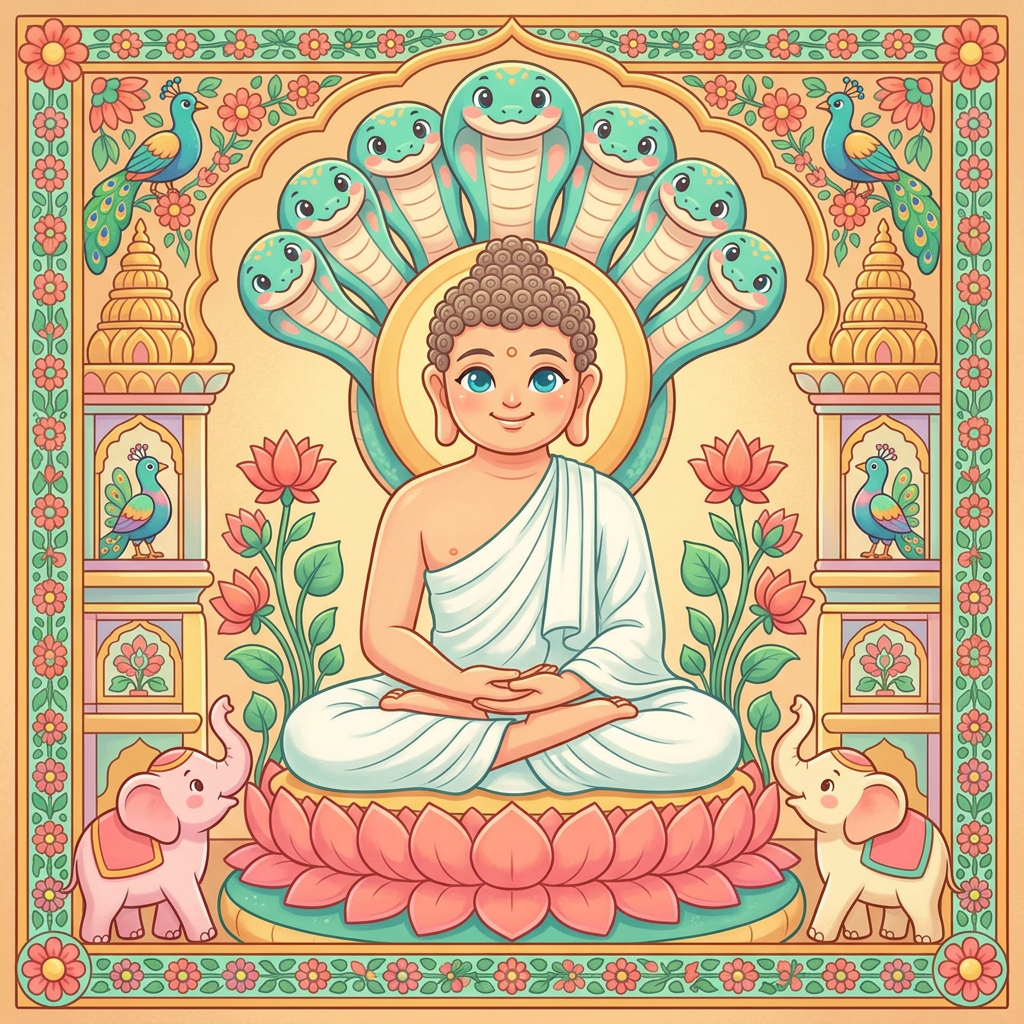
- 1Parshvanatha is the twenty-third Jain Tirthankara.
- 2He taught before Mahavira.
- 3His symbol is a snake.
- 4Images often show him sheltered beneath seven serpent hoods.
- 5Jain tradition remembers him as a teacher of non-harming and truthfulness.
- 6Stories tell how he helped snakes trapped inside a log.
- 7His serpent canopy stands for protection in many Jain images.
- 8A Tirthankara is a teacher who shows others a path across life's difficulties.
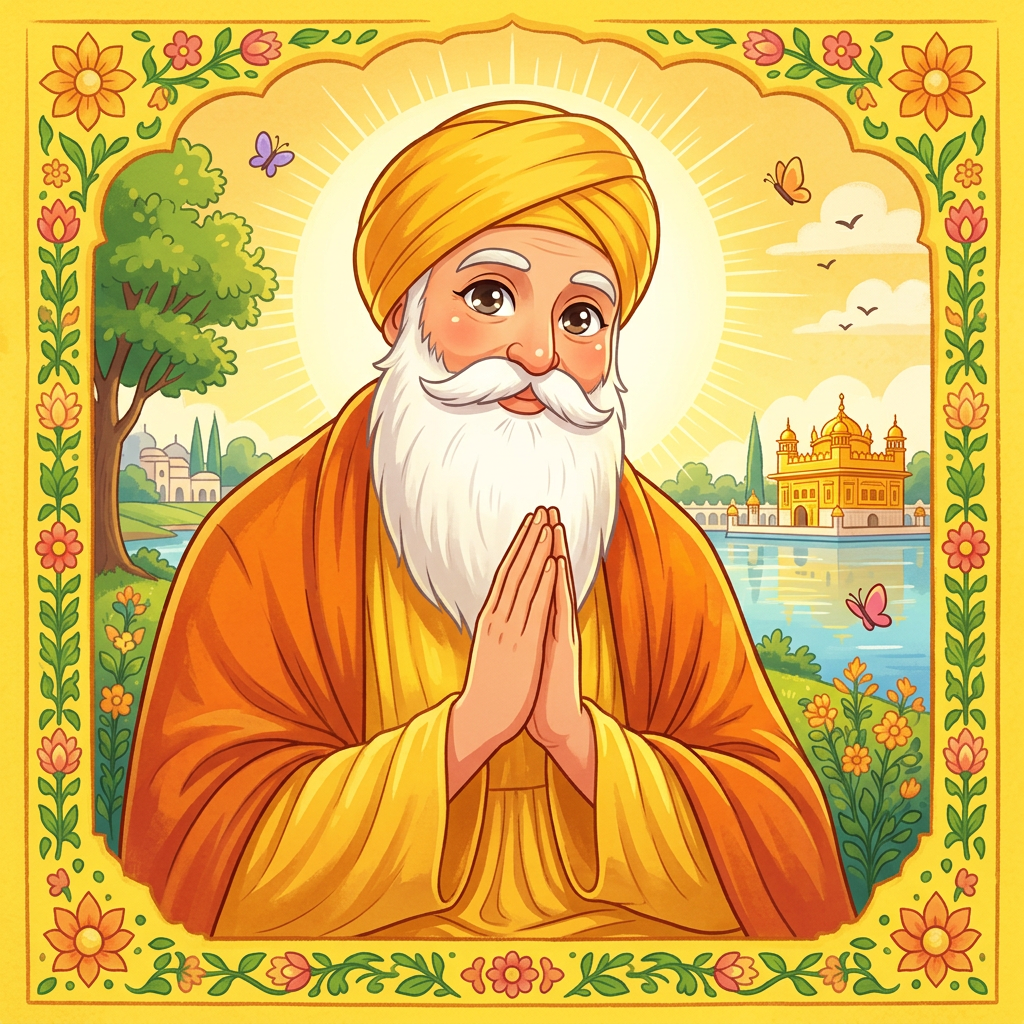
- 1Guru Nanak is the first of the ten Sikh Gurus.
- 2He travelled far to share his teachings.
- 3His companion Bhai Mardana played a string instrument called the rabab.
- 4He taught that all people deserve equal respect.
- 5Sikhs honor Guru Nanak as a teacher, not as a god.
- 6He taught people to remember one God, work honestly, and share with others.
- 7Langar is a free community meal where everyone can eat together as equals.
- 8Gurpurab celebrations remember Guru Nanak's birth with singing and community meals.
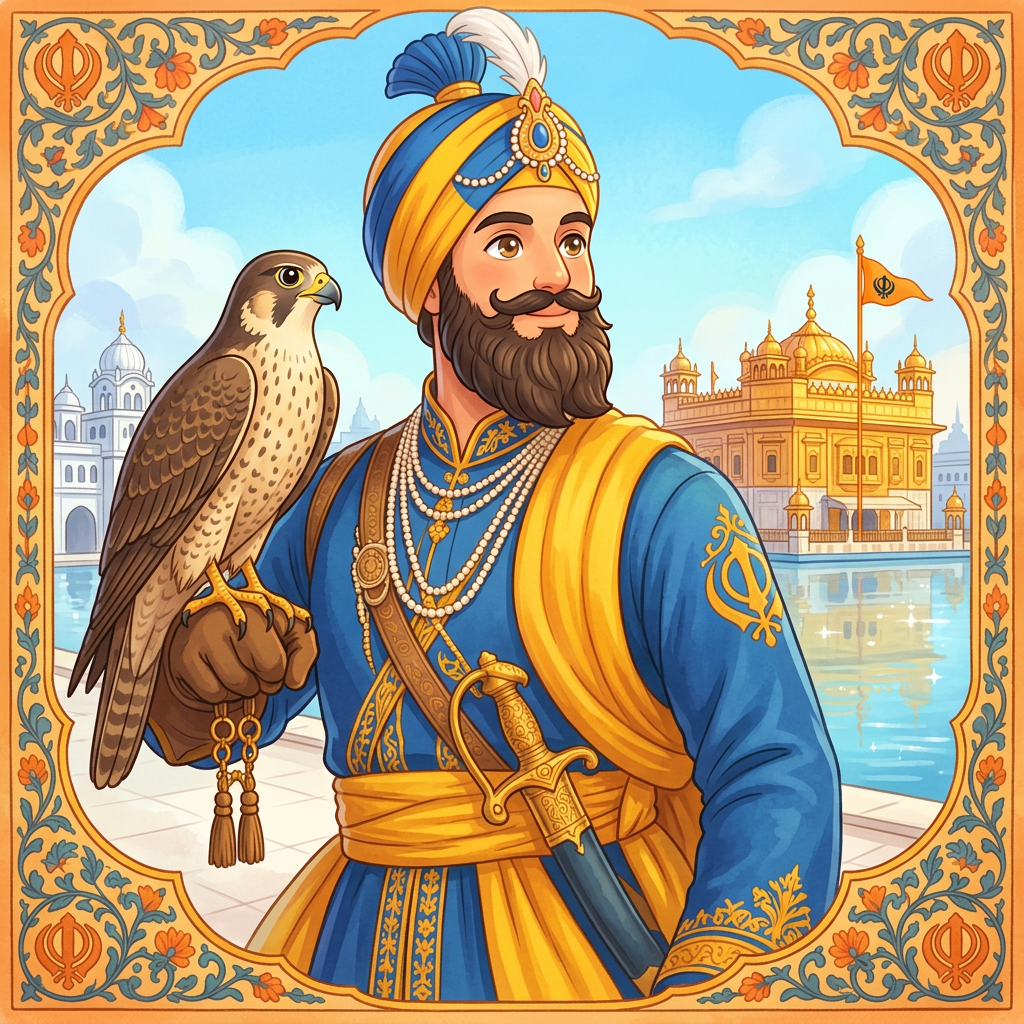
- 1Guru Gobind Singh is the tenth Sikh Guru.
- 2He founded the Khalsa at Anandpur Sahib in 1699.
- 3He was a poet as well as a brave leader.
- 4He taught Sikhs to follow Guru Granth Sahib as their eternal Guru.
- 5Sikhs honor Guru Gobind Singh as a teacher, not as a god.
- 6At Vaisakhi in 1699, the first five members of the Khalsa are remembered as the Panj Pyare, or Beloved Five.
- 7The names Singh and Kaur are linked with the Khalsa and express dignity and equality.
- 8His writings and leadership taught courage together with compassion for others.