A festival of courage & care
Navratri for kids
Nine nights. Nine ways to know Durga.
Why do we celebrate Navratri?
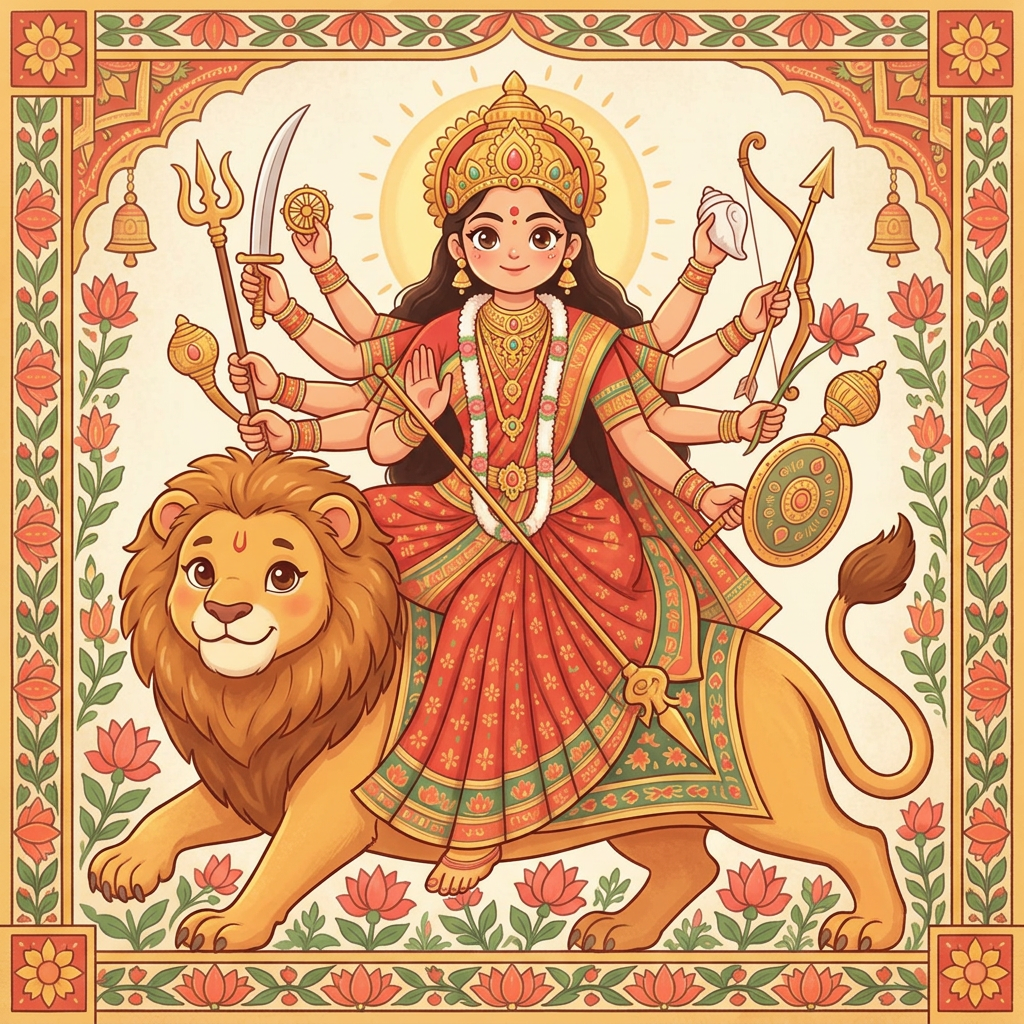
Navratri means “nine nights.” In Hindu traditions, families spend these nights honouring the Goddess, often called Durga or Devi. Many remember her victory over Mahishasura, whose pride and cruelty troubled the world. The Devi Mahatmya tells of the Goddess restoring peace. It is a story of protective strength, not a lesson that children should fight.
The nine forms honoured on successive days are called Navadurga. Each has a name, an image and a quality to think about — from Shailaputri’s steadiness to Siddhidatri’s blessings. Some traditions arrange celebrations differently; the nine-day order below is a widely followed one.
Families celebrate in many ways. In Gujarat, people dance garba and dandiya; in Bengal, neighbours visit Durga Puja pandals; in Tamil Nadu, families display golu dolls and share stories. Some families pray or fast, while little children can simply join in songs, stories, food and time together. The tenth day, Vijayadashami or Dussehra, celebrates the triumph of good.
Meet the nine roops
Roop means form. Pick a day to read her story and a little prayer.
Shailaputri
Daughter of the mountain
A bull, a lotus and a trident · Steadiness
Read her page →Brahmacharini
The devoted seeker
A prayer-bead garland and water pot · Patience
Read her page →Chandraghanta
She whose moon resembles a bell
A crescent moon and a tiger · Calm courage
Read her page →Kushmanda
The radiant creator
Sunlight and a glowing smile · Hope
Read her page →Skandamata
Mother of Skanda
A lotus and her child Skanda · Caring love
Read her page →Katyayani
The warrior goddess
A lion, a sword and a lotus · Standing up for others
Read her page →Kalaratri
Night of time
A dark form and a donkey · Facing fear
Read her page →Mahagauri
The radiant goddess
A bull and a white lotus · A fresh start
Read her page →Siddhidatri
Giver of accomplishments
A lotus and a blessing hand · Gratitude and wisdom
Read her page →These are gentle explanations for children, not translations of scripture. The nine forms, their order and their short name prayers follow Drik Panchang’s Navadurga guide. The Mahishasura story is told in the Devi Mahatmya (part of the Markandeya Purana). Rituals and retellings vary between families.
Read the Navratri festival story →