← The gallery
the shrine spread
Quiz →

Indra

Hindu
इन्द्र · King of the Devas
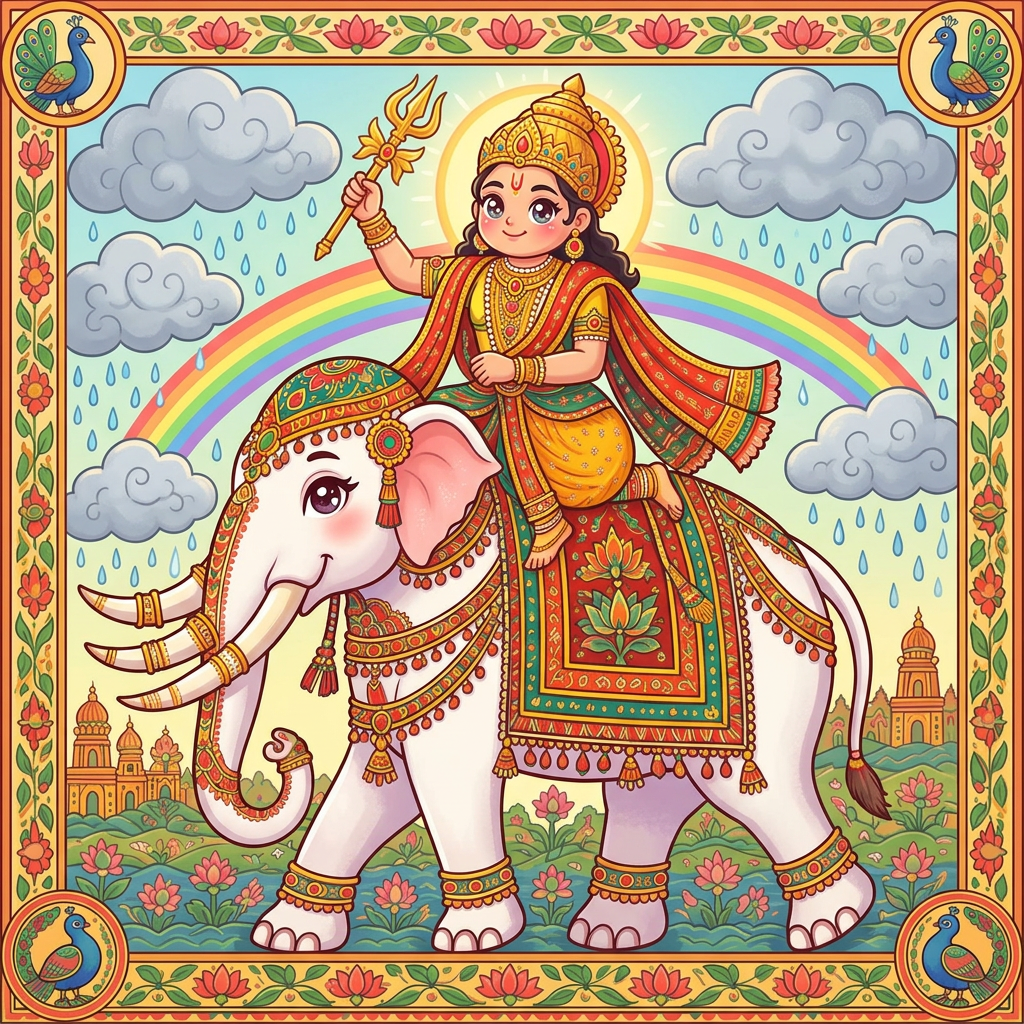
Folk-art illustration of Indra

Indra is the thunder-and-rain king of the gods of the Vedas, India's oldest songs — and he rides a white elephant with four tusks.

facts ledger
Family
Husband of Shachi (Indrani); guardian of the eastern skies
Vehicle
Airavata, the milk-white elephant
Symbols
The vajra — a thunderbolt; the rainbow after rain
Festival
Indra Jatra festival in Kathmandu, Nepal
Temples
Indra has few temples today — he is honoured through the monsoon he brings
Mantra
ॐ इन्द्राय नमः
Om Indraya namah — Salutations to Indra.
the story

In the Rigveda — India's oldest book of hymns, more than 3,000 years old — Indra is the most-praised god of all. He rides a great white elephant named Airavata, swings a thunderbolt called the vajra, and his thousand eyes are said to be the stars in the sky.

Once, a giant serpent named Vritra swallowed all the rivers and sat coiled on top of them, leaving the earth cracked and thirsty. Indra hurled his thunderbolt, split the serpent open, and the rivers leapt out and rushed home — which is why Indra is the god of rain and storms.

Indra's seat as king is not forever. The stories say that whenever he grows proud, he loses his throne until he remembers to be humble — a reminder written into the Vedas thousands of years ago: even kings must stay kind.

wins & brave adventures

Let the Rivers Run

Vritra, a mighty serpent, held back the waters. The rivers could not flow freely. Indra faced Vritra with his thunderbolt. He defeated Vritra and freed the waters. The rivers rushed forward again.

⭐ Lesson: Be brave when others need help.

A Lesson for a King

The gods won a battle and felt very proud. Indra went to meet a mysterious visitor. The visitor vanished, and wise Uma appeared. She explained that their victory came from a greater power. Indra learned that the gods had not won alone.

⭐ Lesson: Remember the help behind every success.

sing along
Tap to listen, then sing along!
ॐ इन्द्राय नमः
Om In-draa-ya Na-mah

What it means: We bow with respect to Indra, the heavenly king linked with rain and thunder.

amazing facts
did you know?

The vajra was forged from the bones of the sage Dadhichi, who gave them willingly — a story about the greatest gift of all: sacrifice.