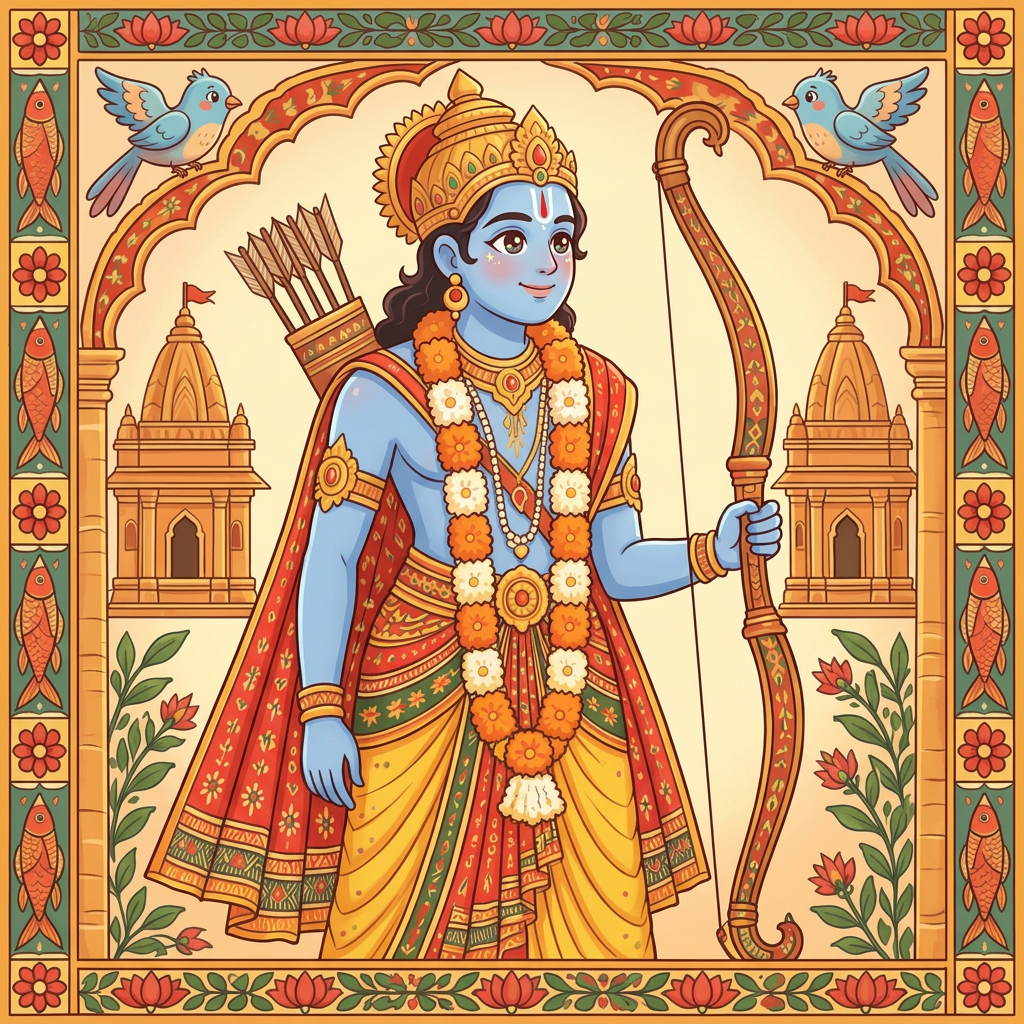
Good always wins
Happy Dussehra! 🏹
Ashvina (usually September or October)
Why do we celebrate?
We celebrate Dussehra to remember when Lord Rama defeated the ten-headed king and Goddess Durga defeated the buffalo demon. It is a happy day that shows us good will always win over bad.
Read “Lord Rama and the Ten-Headed King” →How families celebrate
- Families go to large open grounds to watch the exciting Ramlila plays.
- People watch the spectacular burning of towering Ravana effigies that light up the night sky.
- Many children clean their school books and pencils, placing them on a special altar to ask for blessings in their studies.
- Families dress up in new clothes and visit their friends and relatives to share delicious sweets.
- People visit grand fairs (melas) filled with giant Ferris wheels, toys, and sweet stalls.
Around India
North India
Huge effigies of Ravana, Kumbhakarna, and Meghanada are filled with firecrackers and safely burned in open fields to show the victory of good over bad. Families watch the Ramlila play.
West Bengal and Eastern India
It is celebrated as Vijaya Dashami, the day Goddess Durga defeated the buffalo demon Mahishasura. Families bid farewell to the Goddess by immersing her beautiful clay idols in the river.
Mysore (Karnataka)
The city holds a grand parade called Jumboo Savari. Beautifully decorated elephants walk through the streets, and the spectacular royal palace is covered in one hundred thousand glowing lights!
Kullu (Himachal Pradesh)
More than two hundred deities from different temples are brought together in colorful chariots to a grand valley for a beautiful week-long fair.
Gujarat
Families wake up early, offer special prayers to their tools, instruments, and books (Ayudha Puja), and then enjoy eating yummy snacks like fafda and jalebi together.
Fun facts
- The word Dussehra comes from two words: 'Dasha' meaning ten, and 'Hara' meaning defeat, reminding us of the ten-headed Ravana's defeat.
- It marks the grand finale of the nine-night festival called Navaratri.
- In many parts of India, people exchange leaves of the Shami tree, calling them 'green gold', to wish each other good luck and happiness.
- During this time, actors perform the Ramlila, a stage play of Lord Rama's life, which can sometimes take many nights to tell completely!
- Dussehra is considered a very lucky day to start a new class, learn a new art, or open a new business.
Sources: Valmiki Ramayana, Yuddha Kanda; Devi Mahatmya (Markandeya Purana); plus later tradition